
5 Important Return Metrics for Real Estate Investors
How to evaluate real-estate investments using income, appreciation, cash flow and return metrics—and apply the same discipline to productive, essential-use real assets.
Return Metrics Turn an Investment Story Into Measurable Economics
Real estate is a tangible asset class, but not every property or productive asset performs in the same way. A disciplined investor looks beyond purchase price and considers income, expenses, capital committed and the factors that may influence long-term value.
For BARON investors, this framework is relevant across agricultural land, managed poultry estates, cold storage, warehousing and logistics, animal-feed production and income-oriented commercial infrastructure.
Understanding Real-Estate Return Metrics
Rental / Operating Yield
Yield measures recurring annual income in relation to asset value or cost. For productive real assets, income may arise from commercial use or operating arrangements rather than conventional residential rent alone.

How BARON Applies This
Expected operating income can be considered against capital committed to the specific productive asset together with applicable costs and commercial terms.
Capital Appreciation
Capital appreciation is the increase in market value over time. Location, infrastructure, surrounding development, productive utility and demand can influence long-term value.

How BARON Applies This
Strategically selected land or commercial assets can combine productive development with the potential for long-term asset value.
Cash Flow
Cash flow is money remaining after applicable operating expenses and financing obligations are deducted from income.

How BARON Applies This
Professional management focuses on operations, utilisation, costs and revenue. Project assumptions should be reviewed when assessing projected net cash flow.
Return on Investment (ROI)
ROI compares gain or income with the amount of capital invested. The period measured and included costs should be consistent when projects are compared.

How BARON Applies This
ROI can consider acquisition cost, development expenditure and project economics while distinguishing operating income from changes in asset value.
Internal Rate of Return (IRR)
IRR is a discounted-cash-flow measure that accounts for the timing of money invested and received and can help compare projects with different cash-flow patterns.
How BARON Applies This
Where projects include staged investment, financing, operating income and an eventual exit value, IRR can provide an additional comparison tool based on the assumptions used.
Why Essential-Use Productive Assets Can Remain Relevant During Economic Downturns
Return metrics explain financial performance; underlying demand explains why an asset is economically useful. Food production, animal feed, cold storage, warehousing, logistics and functional commercial infrastructure serve recurring needs.
Economic downturns can affect volumes, costs, margins and valuations, but these underlying human and business requirements do not simply disappear. BARON therefore focuses on identifiable productive assets linked to real economic activity.

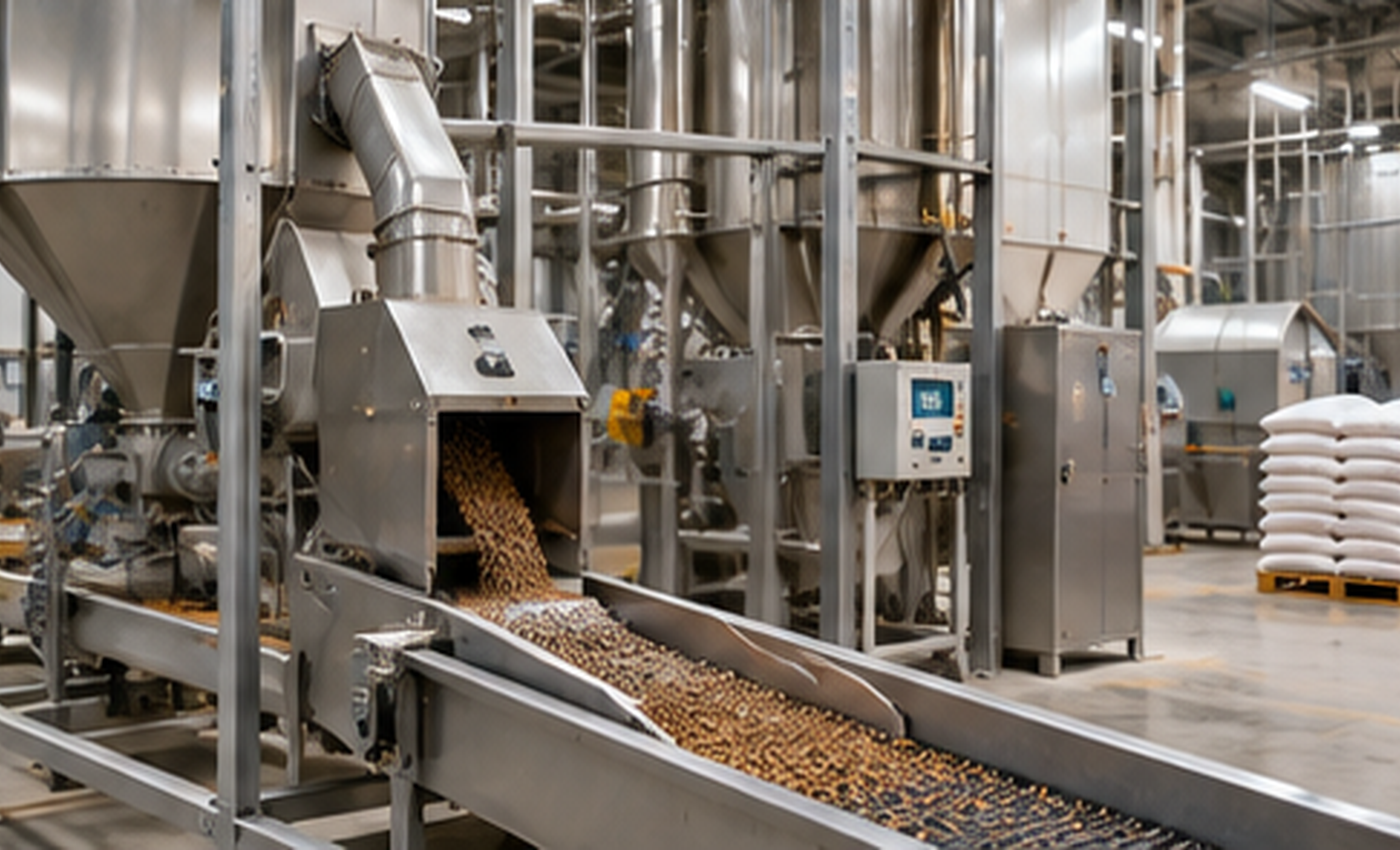
Nutrition remains an everyday requirement.

Supports livestock and food production.

Perishables require preservation.
Goods require storage and distribution.

Businesses require functional infrastructure.
From Capital to a Professionally Managed Productive Asset
1. Land / Asset Acquisition
Identify and acquire an appropriate underlying asset.
2. Financing Support
Where applicable, assistance with bank/NBFC financing processes.
3. Asset Development
Develop infrastructure for productive commercial use.
4. Professional Management
Manage operations under the relevant project arrangement.
5. Business Operation
Operate productive activity linked to real-economy demand.
6. Income Generation
Operating activity creates potential income and long-term asset value.

Measure the Return — But Understand What You Actually Own
BARON is structured around the investor owning the specific underlying asset according to the applicable legal and acquisition structure, rather than merely purchasing a fractional interest in a pooled asset.
- Identifiable underlying asset
- Defined location and specifications
- Applicable ownership documentation
- Productive commercial use
- Professional development and management support
Turn Capital Into Productive Ownership
Explore investor-owned agricultural and commercial assets connected to productive use, professional management and potential operating income and long-term asset value.
Explore Private Investor Access →Common Investor Questions
Which return metric is most important?
No single metric gives the full picture. Yield, cash flow, ROI, appreciation and IRR answer different questions.
How do essential-use assets behave during downturns?
They can retain economic relevance because recurring needs continue, although revenues, costs, margins and values can still change.
What assets does BARON focus on?
Depending on availability: agro-commercial land, poultry estates, cold storage, warehouses, logistics, feed production and commercial assets.
Can productive assets generate recurring income?
Commercial activity may generate recurring operating income; actual results depend on project economics and conditions.
How does financing affect returns?
Financing changes cash requirements and cash flow; interest, fees and repayments should be included in return analysis.
What risks should be evaluated?
Title, documentation, economics, operations, demand, financing, regulation, management, liquidity and exit terms.
Can I exit later?
Exit arrangements are project-specific and should be reviewed in the applicable documentation.
Who manages BARON assets?
Bizquick supports development and professional management according to the relevant project structure and agreement.
Related Articles

Benefits of Investing in a Poultry Farm
Why Passive Real Estate Investment Should Be in Your Portfolio

Productive Real Assets During Economic Downturns
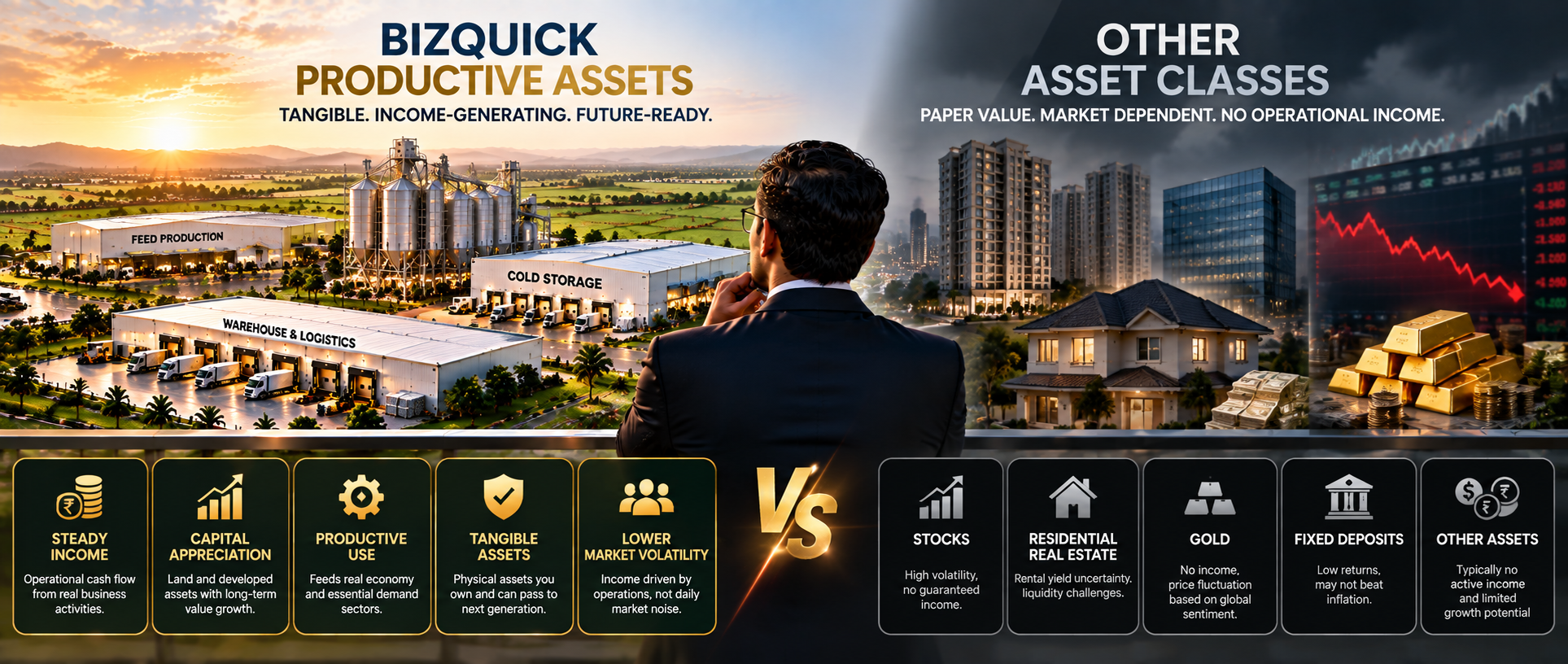
Productive Assets vs Other Asset Classes
This article is for educational and informational purposes only and does not constitute financial, investment, tax or legal advice, an offer or solicitation. Return metrics are analytical tools and do not guarantee future results. Real-estate and productive-asset investments involve market, operating, financing, regulatory, liquidity and project-specific risks. Income, appreciation, ROI, IRR and exit outcomes are not guaranteed. Investors should review project documentation, conduct independent due diligence and obtain appropriate professional advice before making an investment decision.